
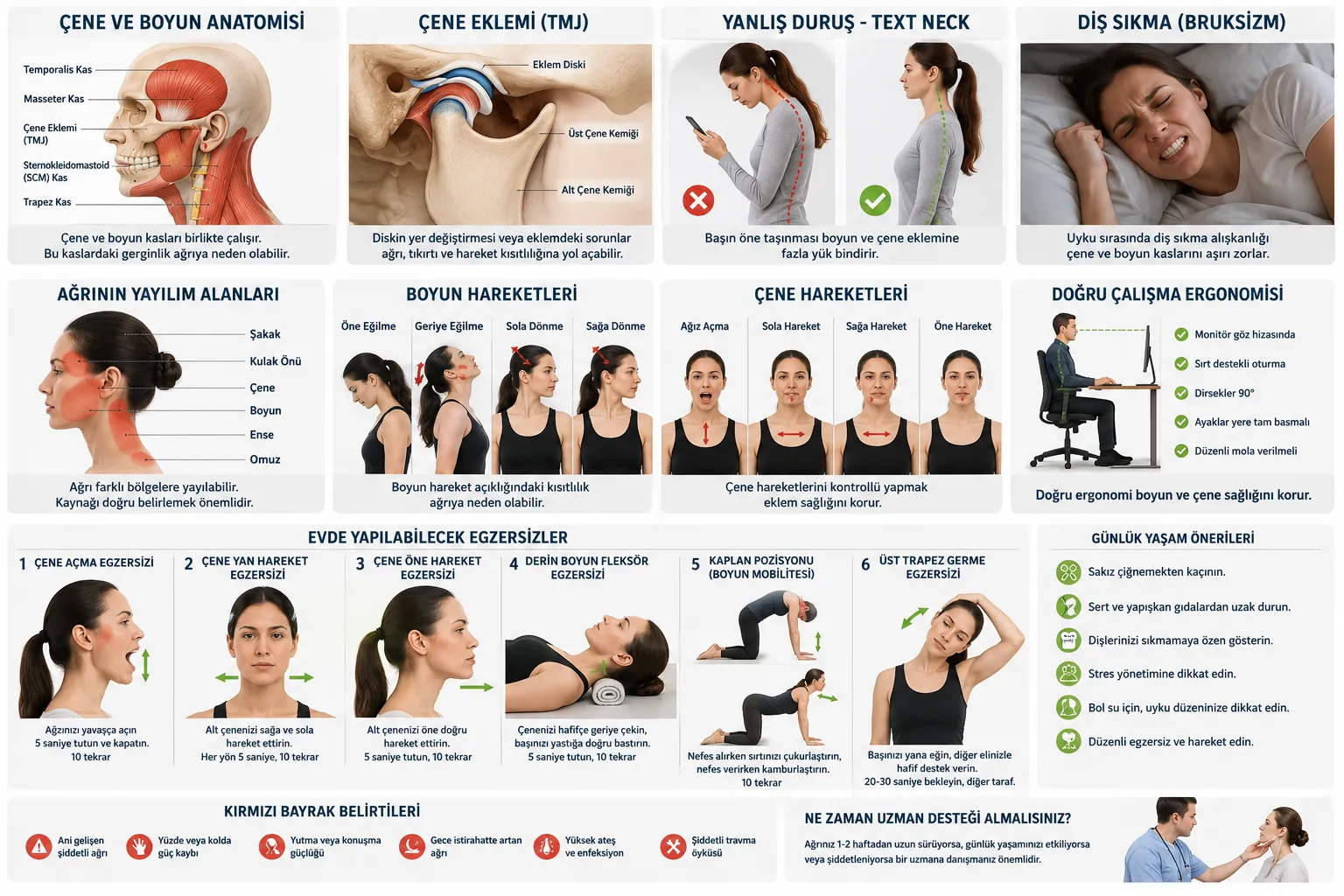
What Causes Jaw and Neck Pain? Symptoms, Causes, and Treatment with Physiotherapy
What is Jaw and Neck Pain?
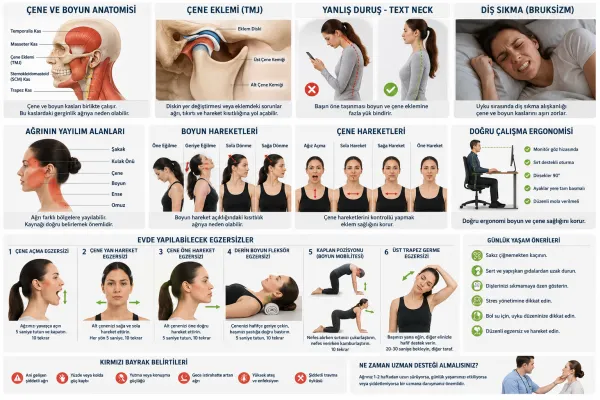
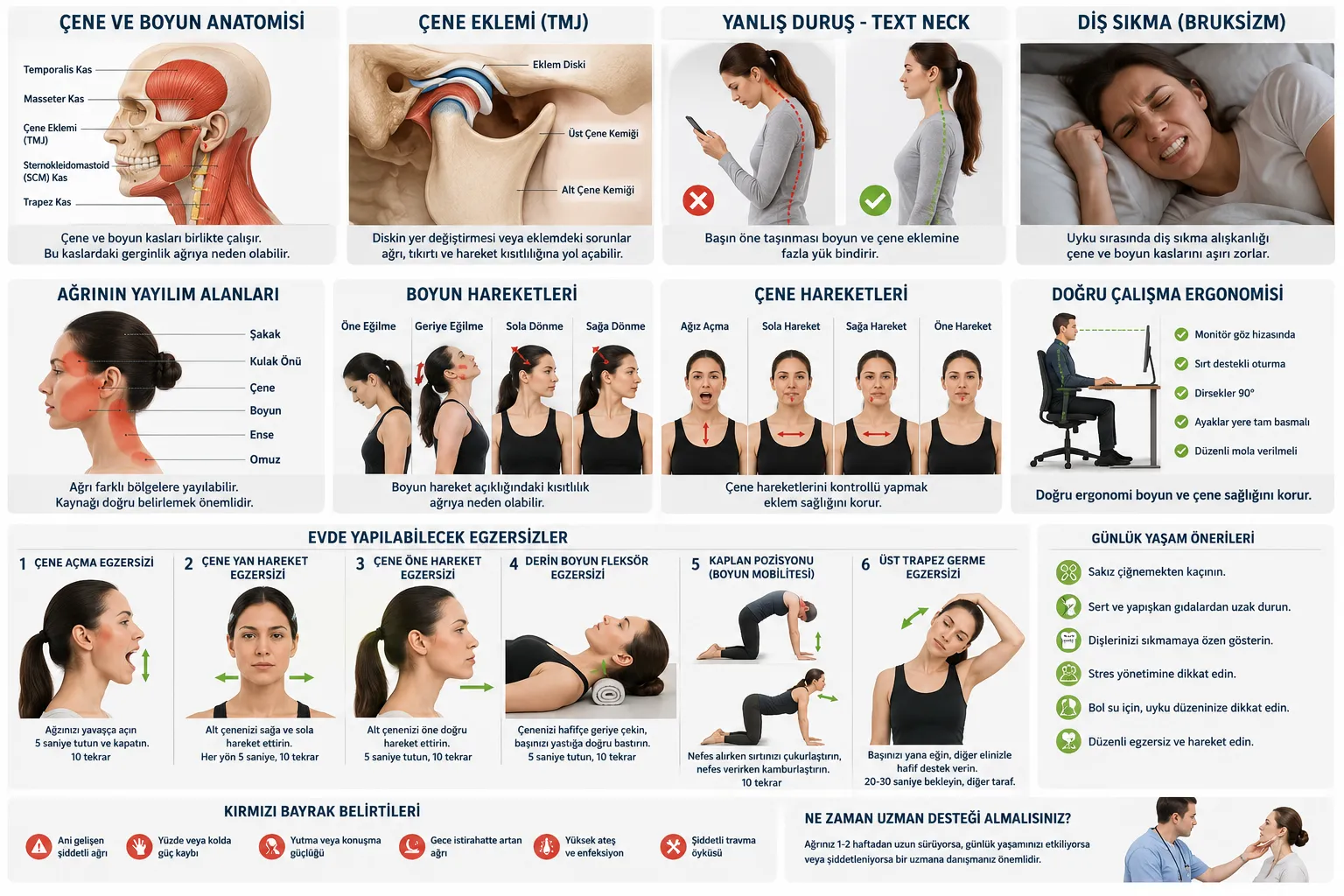
Simultaneous jaw and neck pain is much more common than generally believed. Many people think their pain originates only from the jaw joint or only from the neck. However, these two areas are closely linked anatomically, biomechanically, and neurologically.
Especially in individuals who work long hours at a desk, those who clench their teeth (bruxism), those experiencing intense stress, and those with postural problems, the jaw and neck region can be affected together. Therefore, treating only the area where the pain is felt is often insufficient; the entire musculoskeletal system causing the pain should be evaluated together.
Current scientific studies show that a significant portion of individuals with temporomandibular joint (TMJ) disorders also have limited cervical spine movement, muscle imbalance, and postural problems. Similarly, individuals experiencing chronic neck pain more frequently experience symptoms such as jaw joint pain, jaw clicking, difficulty opening the mouth, and discomfort during chewing.
Therefore, instead of considering jaw and neck pain as two separate, independent problems, it is more accurate to treat them as part of the same functional system.
CHAPTER 2: Causes of Jaw and Neck Pain
What Causes Jaw and Neck Pain?
Jaw and neck pain doesn't develop due to a single cause. Often, muscles, joints, the nervous system, and daily life habits are all affected. Therefore, instead of focusing only on the area where the pain is located, the entire musculoskeletal system should be evaluated.
Below, let's examine in detail the most common causes of jaw and neck pain.
1. Temporomandibular Joint (TMJ) Disorders
The jaw joint is a complex joint where the lower jaw connects to the skull and moves thousands of times a day. It works constantly during speaking, chewing, swallowing, and yawning.
Functional disorders developing in this joint can lead to the following symptoms:
Pain when opening the jaw
Clicking or popping sound
Jaw locking
Restricted mouth opening
Pain during chewing
Tenderness in front of the ear
Many patients with TMJ disorders also experience tension and limited movement in the neck muscles. This is because the jaw and neck muscles work together.
2. Forward Head Posture
Forward head posture, where the head is tilted forward, is one of the most common musculoskeletal problems today.
Prolonged work at a computer, leaning over to look at a phone, and inadequate ergonomics cause the center of gravity of the head to shift forward. For every centimeter the head moves forward, the load on the neck muscles increases.
This situation:
Increases the load on the jaw joint.
Can cause excessive activity in the chewing muscles.
Can create tension in the neck and shoulder muscles.
Can trigger headaches.
Prolonged poor posture can negatively affect not only the neck but also the jaw joint.
3. Bruxism (Teeth Grinding)
Bruxism is the involuntary clenching or grinding of the teeth. Although it usually occurs during sleep, some people clench their teeth during the day without realizing it.
The habit of teeth grinding;
It can cause:
Overactivity of the masseter muscle,
Fatigue of the temporal muscles,
Excessive load on the temporomandibular joint,
Protective contractions in the neck muscles.
Bruxism should be evaluated in individuals who experience jaw fatigue, tooth sensitivity, or headaches upon waking in the morning.
4. Excessive Tension in the Neck Muscles
The sternocleidomastoid (SCM), upper trapezius, levator scapulae, and suboccipital muscles in the neck region are closely related to jaw movements.
Tension or trigger points developing in these muscles can cause:
Pain radiating to the jaw,
Discomfort around the ear,
Temple pain,
A feeling of pressure behind the eye,
A feeling of dizziness.
Trigger points, especially in the SCM muscle, can mimic jaw pain.
5. Herniated Disc in the Neck
Not every jaw pain is caused by a herniated disc in the neck. However, certain problems, particularly in the upper cervical region, can cause pain radiating to the jaw area.
In individuals with a herniated disc in the neck;
Neck pain,
Arm pain,
Numbness in the fingers,
Stiffness in the neck,
In some cases, discomfort around the jaw may occur together.
Therefore, neurological findings should be carefully examined during the evaluation.
6. Cervical Straightening
A decrease in the natural curvature of the cervical spine can cause the muscles to work harder.
While cervical straightening alone does not always cause pain, it can contribute to complaints such as:
Muscle fatigue,
Restricted movement,
Headaches,
Muscle tension around the jaw.
What is important is not only the X-ray image, but also the person's clinical findings.
7. Stress and Muscle Tension
Intense stress can cause involuntary contraction of the jaw muscles. In particular, unconscious teeth grinding during the day, constantly pulling the shoulders upwards, and keeping the neck muscles tense can lead to pain over time.
In individuals with stress-induced muscle tension:
Symptoms such as jaw clenching,
temple pain,
neck stiffness,
feeling of heaviness in the shoulders,
waking up tired in the morning may occur.
8. Phone and Computer Use
With the increase in smartphone use, postural disorders called "text neck" are seen more frequently.
Using the phone for long periods while looking down can lead to:
Overloading of neck muscles,
Increased load on the temporomandibular joint,
Muscle imbalance in the shoulder girdle.
Ergonomic arrangement of the work environment and regular movement breaks can reduce these risks.
9. Overuse of Chewing Muscles
Constantly chewing gum, unilateral chewing habits, or frequent consumption of hard foods can cause the jaw muscles to work excessively.
Over time, this can lead to:
Stiffness in the masseter muscle,
Pain during jaw movements,
Compensatory tension in the neck muscles.
10. Trauma
Previous traffic accidents, falls, sports injuries, or whiplash injuries can affect both the jaw and neck.
Following trauma, not only bone structures but also connective tissues, muscles, and the nervous system should be evaluated.
The Real Source of Pain May Not Always Be the Jaw
Pain felt in the jaw area does not always originate from the jaw joint.
The source of pain can sometimes be:
Neck muscles,
Upper cervical joints,
Myofascial trigger points,
Postural disorders,
Referred pain originating from the nervous system
may be the cause.
Therefore, instead of focusing only on the area where the pain is located, a comprehensive physiotherapy evaluation is important for reaching an accurate diagnosis.
CHAPTER 3: How is Jaw and Neck Pain Diagnosed? Why is Accurate Diagnosis So Important in Jaw and Neck Pain?
The most important step in treating jaw and neck pain is accurate assessment. Because the area where the pain is felt may not always be the source of the problem. For example, pain felt in the jaw joint may actually originate from the neck muscles or the upper cervical spine. Similarly, in a person presenting with neck pain, the real problem may be temporomandibular joint (TMJ) dysfunction.
Therefore, instead of focusing only on the point of pain, the jaw joint, cervical spine, muscles, posture, chewing habits, and daily life should be evaluated together.
What Questions Are Asked During the Initial Assessment?
Taking a detailed history forms the basis of an accurate diagnosis. The following questions can be helpful during the assessment:
When did the pain start?
Did the pain start suddenly or develop gradually?
Is the pain unilateral or bilateral?
Do you experience fatigue in your jaw when you wake up in the morning? Do you have a habit of clenching or grinding your teeth? Do you hear a sound when you open your jaw? Can you fully open your mouth? Is it accompanied by headache, earache, or facial pain? Do neck movements increase the pain? Have you recently undergone dental treatment, trauma, or orthodontic procedures? Do you work at a computer for long periods? How much time do you spend using your phone during the day?
This information provides important clues in determining the possible source of the pain.
What is Examined During a Physical Examination?
A comprehensive assessment does not only examine the temporomandibular joint. It should be remembered that the musculoskeletal system is a whole.
Posture Analysis
First, the person's posture while standing and sitting is evaluated.
The following conditions are particularly examined:
Head tilting forward
Shoulders drooping forward
Position of the shoulder blades
Neck curvature
Position of the thoracic spine
Posture disorders can increase the load on the temporomandibular joint and directly affect the treatment plan.
Jaw Movement Assessment
The range of motion of the temporomandibular joint is evaluated.
The main movements examined are:
Amount of mouth opening
Mouth closing
Movement of the lower jaw to the right and left
Movement of the lower jaw forward
Whether there is deviation during movement
Whether pain occurs during movement
Clicking or crepitation sound
Normal mouth opening is generally around 40–50 mm. However, the assessment should be based not only on measurement but also on the individual's function.
Muscle Examination
The muscles in the jaw and neck region are evaluated manually.
Tenderness is particularly investigated in the following muscles:
Masseter
Temporalis
Medial pterygoid
Lateral pterygoid
Sternocleidomastoid (SCM)
Upper trapezius
Levator scapulae
Suboccipital muscles
Trigger points in these muscles can cause pain radiating to the jaw, ear, temple, and nape of the neck.
Examination of Neck Movements
The range of motion of the cervical spine is evaluated.
Forward bending
Backward bending
Turning to the right and left
Side bending
Pain, stiffness, or restricted movement is assessed.
Joint Mobility
If necessary, the physiotherapist may assess the joint mobility of the cervical spine and temporomandibular joint.
This assessment can identify:
Restricted movement
Hypermobility
Hypomobility
Protective muscle spasm
and similar conditions.
Is Imaging Always Necessary?
No.
Not everyone experiencing jaw and neck pain needs an MRI or CT scan.
In many musculoskeletal problems, a detailed history and physical assessment may be sufficient to reach a diagnosis.
Imaging methods are preferred when there are specific clinical findings.
In Which Cases MRI Might Be Ordered?
Magnetic Resonance Imaging (MRI) can be particularly useful in evaluating soft tissues and the temporomandibular joint disc.
MRI may be considered in the following situations:
Frequent jaw locking
Severe range of motion
History of severe trauma
Surgical planning
Suspicion of disc displacement
Complaints that do not improve despite conservative treatment
The decision to order an MRI should be made in conjunction with a clinical evaluation.
When are X-rays Used?
X-rays can help in evaluating bone structures.
However, they provide limited information about muscles, ligaments, and the joint disc.
Therefore, it is not necessary to routinely request them for every patient.
Red Flag Signs in Jaw and Neck Pain
Some symptoms may indicate more serious illnesses and should be evaluated by a physician without delay.
Medical evaluation should not be delayed in the following situations:
Unexplained weight loss
High fever
Severe pain that persists even at rest
Progressive weakness in the face or arm
History of serious trauma
Inability to open the jaw at all
Sudden facial paralysis
Difficulty swallowing
Speech difficulties
Suspected signs of infection
Newly onset pain accompanied by a history of cancer
These symptoms do not always indicate a serious illness; however, they always require a thorough evaluation.
What Diseases Can Jaw and Neck Pain Be Confused With?
Pain in the jaw and neck area can stem from various causes.
Conditions that can be evaluated in differential diagnosis include:
Temporomandibular joint disorders
Myofascial pain syndrome
Cervicogenic headache
Neck pain
Trigeminal neuralgia
Dental pain
Sinusitis
Ear diseases
Migraine
Cluster headache
Certain vascular diseases such as giant cell arteritis
Rarely, referred pain from the heart
Therefore, instead of trying to diagnose based solely on information obtained from the internet, it is important to conduct a comprehensive clinical evaluation.
Why Does Physiotherapy Evaluation Make a Difference?
Physiotherapy evaluation aims not only to determine the location of the pain but also to understand why the pain occurs.
During a personalized evaluation, the following are examined together:
Quality of movement,
Muscle strength,
Muscle endurance,
Posture,
Breathing pattern,
Daily living habits,
Chewing function,
Neck and jaw coordination.
Thanks to this holistic approach...
CHAPTER 4: Physiotherapy and Scientifically Effective Treatment Methods for Jaw and Neck Pain
Is Jaw and Neck Pain Treatable?
Yes. In many people experiencing jaw and neck pain, pain control, increased function, and improved quality of daily life are possible with accurate diagnosis and individually planned conservative treatment.
However, the most important point here is that treatment should not focus solely on reducing pain. Biomechanical, musculoskeletal, and lifestyle factors that cause the pain should also be addressed. Otherwise, even if symptoms are temporarily relieved, complaints may recur.
Current clinical guidelines recommend a multifaceted approach that includes patient education, exercise therapy, and, when necessary, manual therapy.
Why is an Individualized Assessment Necessary Before Starting Treatment?
Two people experiencing pain in the same area does not mean they should receive the same treatment.
For example;
One patient may have a primary problem of teeth grinding. Another may have limited neck movement.
In another person, overloading of the jaw muscles or postural disorders may be more pronounced.
Therefore, the treatment plan should be prepared according to the assessment findings, lifestyle, and the individual's goals.
1. Patient Education: The Cornerstone of Treatment
Scientific research shows that understanding one's own condition increases adherence to treatment.
Patient education can cover the following topics:
How the temporomandibular joint works
Habits that increase pain
Things to pay attention to in daily life
Strategies for recognizing teeth grinding
The importance of sleep and stress management
Correct work ergonomics
The purpose and application of exercises
Instead of trying to suppress pain only with medication, understanding why the pain occurs is important for long-term success.
2. Manual Therapy
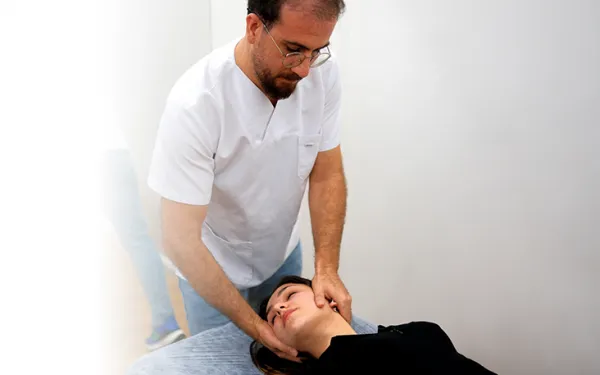
Manual therapy is the general name for techniques applied by a physiotherapist with their hands, aiming to support joint movement, increase soft tissue mobility, and reduce pain.
In patients with jaw-neck relationship issues, treatments targeting the following areas may be planned according to the evaluation results:
Temporomandibular joint
Upper cervical spine
Neck vertebrae
Thoracic spine
Muscles around the jaw
Neck muscles
Shoulder girdle
Manual therapy may not be suitable for every patient. A different approach may be necessary, especially in cases of trauma, fracture, active infection, certain rheumatological diseases, or serious neurological findings.
3. Exercise Therapy
Exercise is one of the most important treatment components for long-term success.
The exercise program should be planned according to the individual's evaluation findings.
Commonly used exercise groups include:
Jaw Control Exercises
Goal:
To make jaw movements more controlled
To improve movement coordination
To reduce unnecessary muscle activity
Strengthening Deep Neck Flexors
Deep neck flexors play a crucial role in balanced head movement.
Weakness in these muscles;
It can contribute to:
Head tilting forward,
Overworking neck muscles,
Increased load on the chin joint.
Scapular Stabilization Exercises
The stability of the shoulder girdle can affect neck and jaw biomechanics.
Therefore, in suitable patients, exercises targeting muscles such as:
Lower trapezius,
Middle trapezius,
Serratus anterior
can be added to the treatment plan.
Movement Control Exercises
The goal is not just to gain strength.
Re-teaching correct movement patterns is also an important part of the treatment.
4. Posture Training
Simply saying "stand straight" is often not enough.
Posture training should be planned considering the person's work environment, screen height, chair arrangement, frequency of breaks, and daily habits.
The following suggestions may be particularly helpful for people who work at a desk:
The monitor should be at eye level.
The phone should not be held between the shoulder and ear for extended periods.
Short movement breaks should be taken every 30-45 minutes.
Laptops should not be used directly on a desk for extended periods.
Position should be changed frequently throughout the day.
5. Soft Tissue Techniques
Excessive muscle tension can be a significant component of pain in some patients.
Depending on the assessment results,
Myofascial release techniques,
Soft tissue mobilization,
Trigger point applications
can be considered as part of the treatment plan.
The aim of these applications is not simply to "relax the muscle"; it is to improve the person's quality of movement and help them adapt better to exercise.
6. Dry Needling
Dry needling is a method used by appropriately trained healthcare professionals to target trigger points in specific muscles.
It is not necessary for every patient with jaw and neck pain.
Situations where dry needling may be considered include:
Pronounced myofascial trigger points,
Muscle spasms,
Persistent muscle tenderness despite exercise.
However, the best results are seen in programs where dry needling is planned in conjunction with exercise and patient education.
7. Home Exercise Program
The home program is as important as the treatment given in the clinic.
The home program should be:
Simple,
Understandable,
Able to be applied regularly,
Suitable for the patient's lifestyle.
Short programs that can be applied regularly may yield more successful results than complex and lengthy exercise lists.
What to Expect from Treatment?
Each patient recovers at a different rate.
The treatment process can be affected by the following factors:
How long the complaint has been ongoing,
Teeth grinding habit,
Everyday ergonomics,
Adherence to exercises,
Sleep patterns,
Psychosocial factors,
Other accompanying health problems.
Therefore, the duration and content of treatment may vary from person to person.
Is a Single Method Sufficient?
No.
The current scientific approach suggests that instead of relying on a single method for jaw and neck pain, a combination of patient education, exercise, manual therapy, and lifestyle adjustments should be planned according to the assessment results.
The aim of treatment is not only to reduce pain but also to enable easier chewing, speaking, yawning, and daily movements.
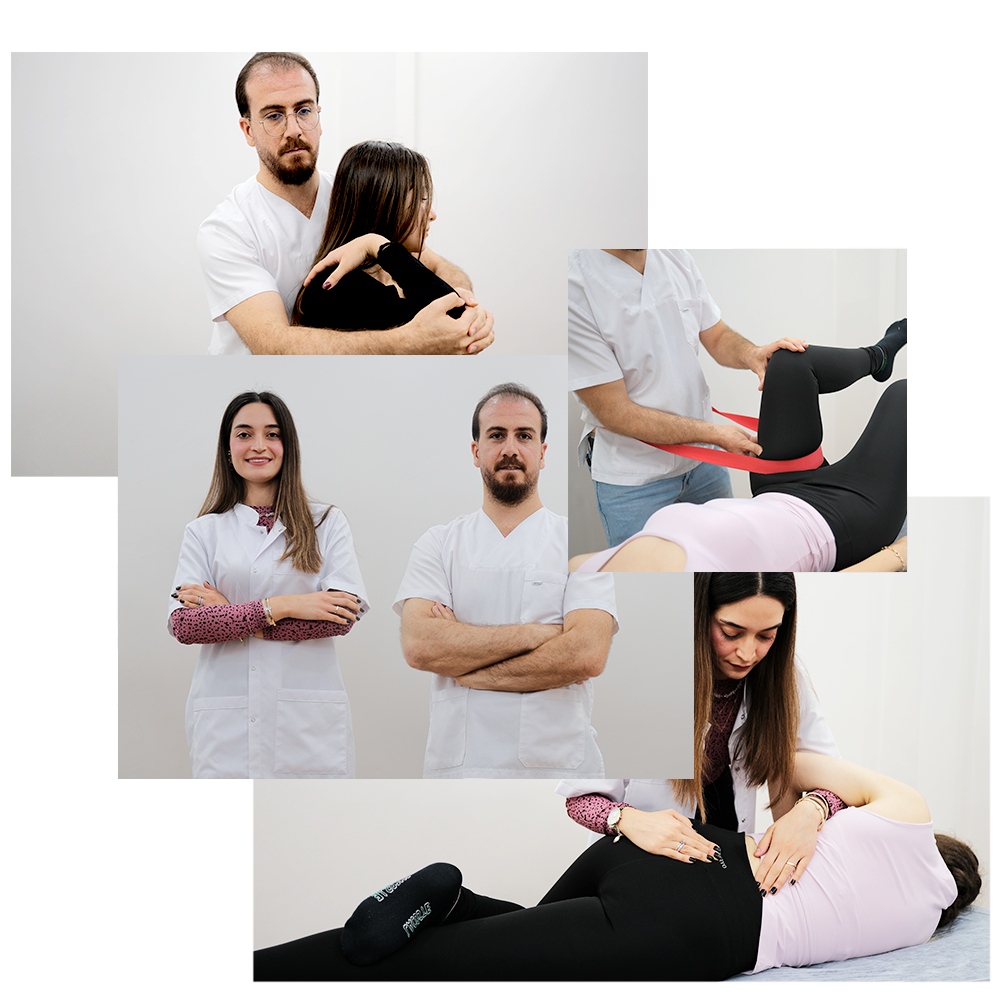
Primer Fizyoterapi Merkezini diğerlerinden ayıran şey bugüne kadar edindiğimiz saygın ve lider sağlık kuruluşu olmamız ve kişiye özel hasta-fizyoterapist deneyimi sunmamızdır.
Hemen aşağıdaki butona tıklayıp Primer Fizyoterapi Merkezini arayarak randevunuzu alabilirsiniz.
Randevu Al